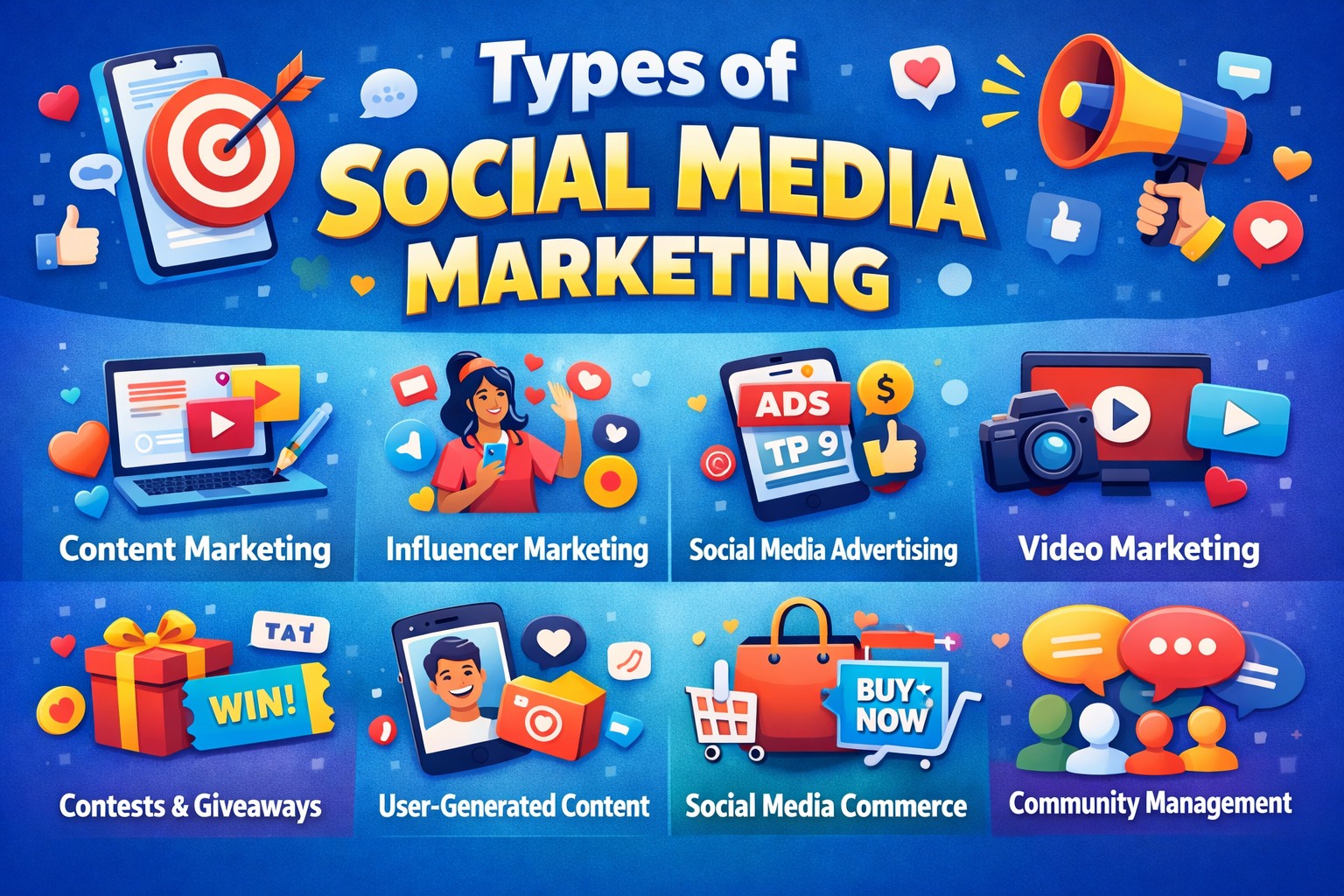
Types of Social Media Marketing: A Simple Guide for Modern Brands
Social media isn’t just a place to scroll endlessly or share memes anymore (although let’s be honest, memes still run the internet  ). Today, businesses use different types of social media marketing to connect with audiences, build trust, and drive real results. Whether you’re a small business owner, a digital marketer, or someone just trying to understand how brands show up on your feed, knowing these strategies matters.
In the first few seconds of scrolling, people decide whether to engage or move on. That’s where choosing the right social media marketing approach makes all the difference. Let’s break it down in a simple, no-confusion way.
What Are the Types of Social Media Marketing?
There are multiple types of social media marketing, and each one serves a different purpose. Some focus on long-term trust, while others are built for quick results. The smartest brands don’t rely on just one method — they mix and match based on goals, audience, and platforms.
Think of social media marketing like a toolbox. You don’t use a hammer for everything… unless you enjoy chaos.
1. Content Marketing (Organic Social Media Content)
Content marketing is one of the most common and effective strategies. It’s all about posting valuable content regularly without paying for ads. This includes posts, reels, stories, carousels, videos, and even educational threads.
Brands use content marketing to educate, entertain, or inspire their audience. When done right, it builds trust over time and makes your brand feel human instead of salesy. Consistency is key here — random posting won’t cut it.
This type works best for businesses that want long-term growth and strong audience relationships.
2. Influencer Marketing
Influencer marketing is basically modern-day word of mouth. Instead of a friend recommending a product, it’s someone with a loyal online following doing it.
Among the popular types of social media marketing, this one works because people trust people more than ads. Influencers create authentic content that feels natural and relatable. From beauty creators to tech reviewers, influencer partnerships help brands reach new audiences quickly.
The secret? Authenticity. Forced promotions are spotted instantly — and ignored just as fast.
3. Social Media Advertising
Paid advertising is for brands that want faster and more targeted results. Platforms like Facebook, Instagram, LinkedIn, and TikTok allow businesses to target users based on age, location, interests, and behavior.
Social media ads are great for launches, promotions, lead generation, and retargeting. With proper testing and optimization, they can deliver measurable ROI. Just remember — even ads need good content. No one likes boring ads, paid or not.
4. Video Marketing
If content is king, video is the crown 👑. Short-form videos, live streams, tutorials, and behind-the-scenes clips dominate social platforms today.
Video marketing helps brands tell stories quickly and emotionally. Whether it’s a 15-second TikTok or a detailed YouTube video, this format boosts engagement and recall.
It’s one of the most engaging types of social media marketing, especially for younger audiences.
5. Contests and Giveaways
Who doesn’t love free stuff? Contests and giveaways encourage likes, shares, comments, and follows — all in one go.
This strategy is perfect for boosting visibility and engagement in a short time. When done creatively, it also helps generate user-generated content and attract new followers organically.
Just make sure the prize matches your brand — otherwise you’ll attract the wrong audience.
6. User-Generated Content (UGC)
UGC is content created by your customers instead of your brand. Reviews, photos, testimonials, and tagged posts fall under this category.
It’s powerful because it feels real. Seeing actual customers use a product builds trust faster than any ad ever could. Brands that repost UGC show appreciation and build community at the same time.
7. Social Media Commerce
Social commerce allows users to shop directly from social media platforms. No extra clicks, no website hopping — just browse, tap, and buy.
This type is perfect for e-commerce brands looking to reduce friction in the buying process. Instagram Shops, Facebook Marketplace, and Pinterest Shopping are great examples.
8. Community Management and Social Networking
This strategy focuses on conversations, not promotions. Replying to comments, managing groups, hosting discussions, and engaging with followers helps brands build loyal communities.
Strong communities turn followers into advocates — and that’s priceless.
Final Thoughts
Understanding the types of social media marketing helps businesses create smarter strategies instead of posting blindly and hoping for the best. From organic content and influencer collaborations to ads and social commerce, each method has its own role.
The best results come from combining these approaches based on your audience and goals. Social media isn’t about being everywhere — it’s about being effective where it matters most.
And remember… social media changes fast, but authentic connection never goes out of style.
